Bangladesh Travel Photography Tour – Rivers, Streets & Untold Stories
Bangladesh rarely appears on mainstream photography travel lists, which is exactly why it feels so rewarding to explore with a camera.
For photographers, filmmakers, and visual travelers, the country offers something many destinations have already lost—raw atmosphere, genuine human interaction, and everyday moments that still feel completely unstaged. One hour you may be standing beside crowded ferries on the Buriganga River in Old Dhaka, and a few days later you could be photographing fishermen moving silently through the misty waterways of the Sundarbans.
This Bangladesh Travel Photography Tour is designed for travelers who want more than quick sightseeing stops. It is built around light, movement, local life, and the kinds of places where meaningful travel photographs happen naturally.
Whether you enjoy street photography, documentary storytelling, portrait work, landscape photography, or cinematic travel films, Bangladesh offers an extraordinary range of visual experiences within a relatively compact journey.
Why Bangladesh Is One of Asia’s Most Underrated Photography Destinations
Bangladesh feels visually alive in ways that surprise many international travelers. Markets spill into the streets, rivers act as highways, workshops operate openly beside the road, and daily life unfolds everywhere without performance or staging.
For photographers, that creates something increasingly rare—authenticity.
The strongest photographs here often come from ordinary moments rather than famous landmarks.
Everyday Life Becomes the Main Subject
A rickshaw driver waiting beside a fading colonial building. Tea workers disappearing into the fog before sunrise. Children jumping into rivers beside wooden boats. Fishermen untangling nets under soft morning light.
In Bangladesh, photography becomes less about chasing attractions and more about observing life carefully.
That’s what makes the country especially rewarding for:
- street photography
- documentary storytelling
- environmental portraits
- travel filmmaking
- cultural photography experiences
A Destination Built for Human-Centered Photography
Unlike highly commercial tourist destinations, Bangladesh still feels natural and unscripted.
People remain curious, approachable, and open to conversation. For photographers who enjoy human interaction and visual storytelling, that openness creates far more meaningful travel experiences.
Many travelers arrive expecting chaos. What they remember later is often the warmth of the people they met along the way.
Old Dhaka – The Visual Heart of Bangladesh
Any serious photography tour in Bangladesh should begin in Old Dhaka.
This part of the city feels dense, energetic, and endlessly photogenic. Narrow alleys open into crowded markets, historic mosques stand beside busy workshops, and layers of life unfold in every direction.
The atmosphere changes constantly throughout the day, which makes the area especially rewarding for photographers willing to slow down and observe.
Sadarghat and the Buriganga River
Sadarghat is one of the most visually dynamic locations in Bangladesh.
Early mornings are usually the best time to photograph here. As the city wakes up, ferries arrive from southern districts while boatmen, laborers, tea vendors, and passengers move through fog, smoke, and warm golden light.
For photographers, the riverfront offers:
- dramatic silhouettes
- strong human interaction
- textured urban scenes
- authentic river-life storytelling
Movement happens quickly, so lightweight camera setups usually work best here.
Heritage Streets & Everyday Atmosphere
Beyond the riverfront, Old Dhaka reveals another side of the city.
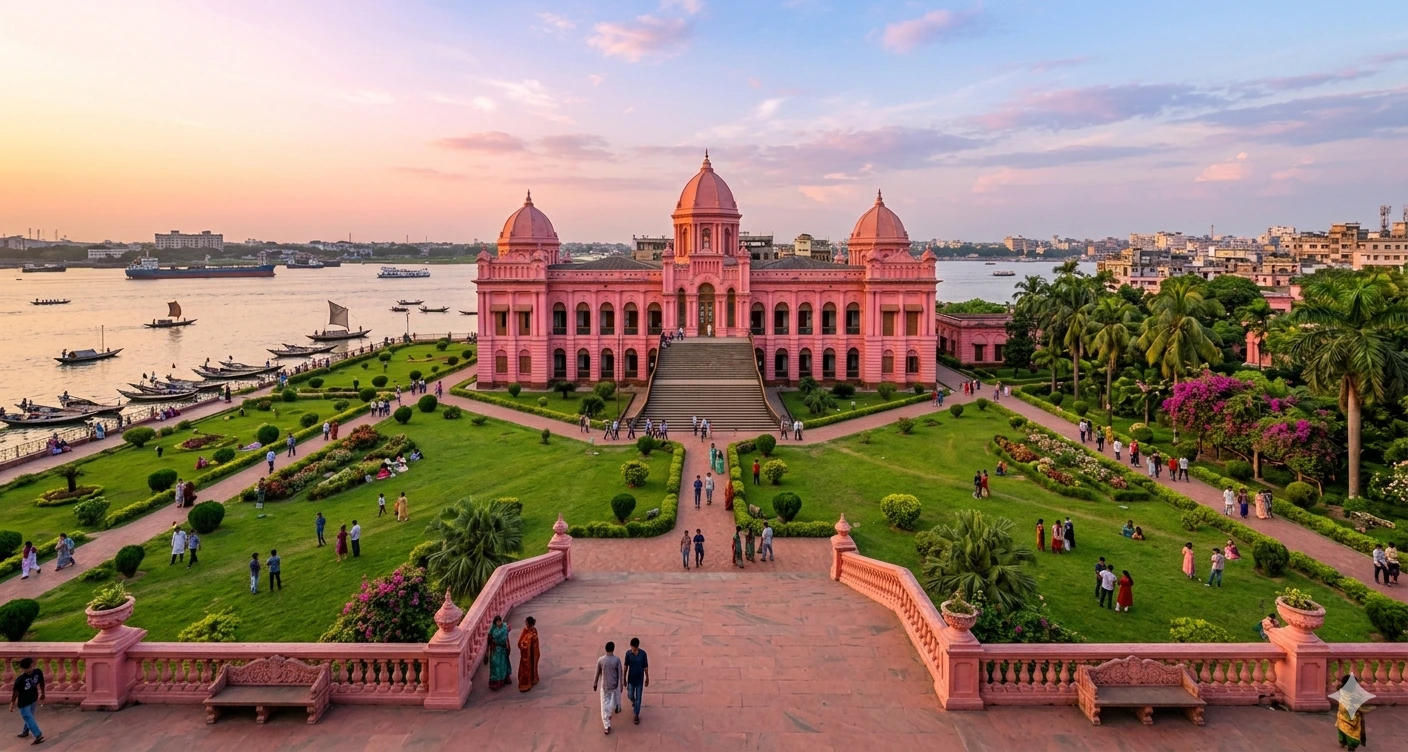
Historic places like Lalbagh Fort, Ahsan Manzil, and Star Mosque create beautiful contrasts against the surrounding street life. Late afternoon is often ideal for photography as softer light begins falling across the narrow streets and old buildings.
Photographers interested in portrait work usually find Old Dhaka surprisingly welcoming. Respectful interaction often leads to natural expressions and memorable human moments.
Bangladesh Heritage Sites & Historical Photography Opportunities
Beyond street life and landscapes, Bangladesh also offers remarkable heritage locations for photographers interested in history, architecture, and cultural storytelling.
Across the country, centuries-old mosques, abandoned merchant towns, Buddhist monasteries, riverfront palaces, and temple complexes create opportunities for photography that feels both historical and deeply atmospheric.
For travelers who enjoy combining documentary photography with architecture and heritage exploration, these locations add another important layer to the journey.
Old Dhaka, Sonargaon & Panam City
Near Dhaka, photographers can explore the fading beauty of Old Dhaka and nearby Sonargaon, the ancient capital of Bengal.
Panam City is especially rewarding for photography. Its abandoned colonial-era merchant houses, broken windows, weathered textures, and quiet streets create a completely different mood from the chaos of the capital.
These locations connect naturally with:
- Old Dhaka day tour
- Panam City day tour
- Sonargaon day tour from Dhaka
- Dhaka to Sonargaon tour package
- Historical tours near Dhaka
Paharpur, Mahasthangarh & Ancient North Bengal
Northern Bangladesh contains some of the country’s most important archaeological sites.
Somapura Mahavihara in Paharpur, a UNESCO World Heritage Site, is one of South Asia’s great Buddhist monasteries and offers stunning symmetry for architectural photography, especially during sunrise and blue hour.
Nearby Mahasthangarh, considered the oldest urban archaeological site in Bangladesh, creates opportunities for storytelling through ruins, local life, and rural landscapes.
These locations fit perfectly for travelers interested in:
- UNESCO world heritage sites tour Bangladesh
- Paharpur day tour from Dhaka
- Somapura Mahavihara Paharpur tour
- Paharpur and Mahasthangarh tour package
- Ancient North Bengal Tour
Bagerhat – The Historic Mosque City
In southern Bangladesh, Bagerhat offers another UNESCO-listed photography experience.
The Sixty Dome Mosque, ancient brick structures, old water reservoirs, and peaceful village surroundings create a softer and more reflective atmosphere compared to urban Bangladesh.
Morning and late afternoon are particularly beautiful here when warm light falls across the historic mosque walls and surrounding palm trees.
For photographers interested in Islamic heritage and architectural photography, Bagerhat pairs naturally with Sundarban journeys and cultural tours across southern Bangladesh.
Sundarban Photography Tour – Wildlife, Waterways & Silence
After the intensity of Dhaka, the Sundarbans introduces an entirely different rhythm.
The world’s largest mangrove forest moves slowly. Photography here becomes more patient and observational. Instead of reacting quickly to street scenes, photographers begin paying attention to light, atmosphere, reflections, and silence.
Exploring the Mangrove Forest by Boat
Most photography experiences inside the Sundarbans happen by boat.
Traveling quietly through narrow canals allows photographers to witness the forest gradually reveal itself through mist, changing tides, and shifting light conditions. Early mornings are especially atmospheric when fog hangs low above the riverbanks.
Many photographers discover that their strongest images here are not wildlife close-ups, but environmental scenes filled with mood and isolation.
Wildlife & Nature Photography Opportunities
The Sundarbans is home to:
- spotted deer
- estuarine crocodiles
- kingfishers
- river dolphins
- monkeys
- migratory birds
- Royal Bengal Tigers
Wildlife sightings are never guaranteed, which makes the experience feel genuine rather than staged. This is a real ecosystem where patience matters.
A telephoto lens helps for wildlife photography, though wide environmental compositions often create the most powerful visual stories.
Chittagong – Industrial Landscapes & Coastal Stories
Chittagong offers one of the most visually powerful photography environments in Bangladesh.
The city combines maritime trade, industrial activity, fishing communities, and coastal life in ways that feel raw, cinematic, and deeply human.
The Ship-Breaking Coastline
The ship-breaking yards are among the most photographed industrial environments in South Asia.
Massive abandoned ships stand along the coastline while workers dismantle steel manually using traditional methods. During sunrise and late afternoon, haze and smoke create dramatic lighting conditions that documentary photographers particularly appreciate.
The area works especially well for:
- industrial photography
- black-and-white photography
- environmental portraits
- documentary storytelling
Because these remain active workspaces, respectful behavior and experienced local guidance are essential.
Fish Markets & Everyday Coastal Life
Chittagong’s fish markets offer a completely different type of visual energy.
The pace is fast, noisy, wet, and unpredictable. Workers carry baskets through crowded lanes while boats unload fresh catches throughout the morning.
For street photographers, the environment creates endless opportunities to capture:
- movement
- emotion
- texture
- labor
- daily survival and trade
Every few seconds, another frame appears.
Sreemangal & Sylhet – Tea Gardens, Rainforest & Soft Light
After the industrial energy of Chittagong, Sreemangal and Sylhet feel calmer, greener, and slower.
These regions offer a softer visual atmosphere filled with rolling tea gardens, rainforest trails, village life, and low mist drifting across the hills.
Tea Garden Photography in Sreemangal
In Sreemangal, mornings often begin with fog moving slowly across the tea estates while distant train horns echo through the hills.
The light here feels softer and more cinematic, especially shortly after sunrise. Tea workers gradually disappear into endless green landscapes, creating minimal and atmospheric compositions.
For photographers who enjoy quiet landscapes and layered environmental storytelling, Sreemangal becomes one of the most rewarding parts of the journey.
Rainforest Trails & Village Life
Lawachara National Park and nearby villages provide opportunities for:
- nature photography
- bird photography
- environmental portraits
- slow travel storytelling
The region also offers a gentler pace for travelers who want quieter photographic experiences after the intensity of Dhaka and Chittagong.
Practical Tips for Photography Travelers in Bangladesh
Bangladesh rewards flexibility more than rigid planning.
Traffic, weather, river conditions, and local activity can change quickly, so photographers who remain adaptable usually have the best experiences.
A few simple things make the journey smoother:
- travel light in busy urban areas
- protect equipment during monsoon months
- ask permission before close portraits
- start early for softer light and lower crowds
Working with experienced local guides also makes a significant difference, especially in complex locations like Old Dhaka, Chittagong, and the Sundarbans.
What Camera Gear Works Best?
A lightweight setup is usually the most practical option.
Many travelers carry:
- a versatile zoom lens
- a portrait lens
- a telephoto lens for wildlife
- weather protection for humid conditions
Comfort matters more than carrying excessive equipment, especially during long shooting days.
Best Time for a Bangladesh Travel Photography Tour
October to March is generally the best season because temperatures remain cooler and skies are often clearer.
However, monsoon months can also produce dramatic moods, reflections, and atmospheric conditions for photographers who enjoy rain-soaked landscapes and softer natural light.
More Than a Photography Tour
What makes Bangladesh memorable is not only its visual variety.
It is the feeling of access to real life.
Many destinations today feel carefully designed around tourism. Bangladesh still feels organic, unpredictable, and emotionally honest. That honesty gives photographers something increasingly difficult to find—images that carry genuine atmosphere and human connection.
For travelers willing to explore patiently, the country offers far more than photographs. It offers perspective.
FAQ – Bangladesh Travel Photography Tour
Is Bangladesh safe for international photography travelers?
Bangladesh is generally welcoming toward foreign visitors. Traveling with experienced local guides helps make the experience smoother, safer, and more comfortable.
What is the best time for a photography tour in Bangladesh?
October to March is usually considered the best season because of cooler weather, comfortable travel conditions, and softer natural light.
Which places are best for street photography in Bangladesh?
Old Dhaka, Sadarghat River Port, Chittagong fish markets, and local bazaars are among the strongest locations for documentary and street photography.
Can beginner photographers join this tour?
Yes. The experience is suitable for both beginner and professional photographers because the locations offer a wide variety of subjects and lighting conditions.
What makes Bangladesh different from other photography destinations?
Bangladesh still feels largely untouched by mass tourism. Everyday life remains authentic, emotionally rich, and visually dynamic, which creates stronger storytelling opportunities for photographers.
Ready to Experience Bangladesh Beyond the Tourist Trail?
A Bangladesh Travel Photography Tour is not about rushing between famous landmarks. It is about slowing down, observing carefully, and experiencing the country through its streets, rivers, people, tea gardens, forests, and everyday moments.
For photographers searching for authentic cultural experiences, emotional storytelling opportunities, and destinations that still feel genuinely unexplored, Bangladesh offers a journey unlike anywhere else in Asia.